I was out in London when my phone died. It was 2am. No battery meant no Uber, and the tubes had already stopped running for the night. I could not call anyone, check a map, or let anyone know where I was. I ended up waiting it out until 8am, when the trains started again.
Looking back, nothing dramatic actually happened to me that night. But that is exactly what stuck with me. I felt genuinely unsafe for hours because of something as small as a dead battery.
I could not stop thinking about how much worse that feeling must be for the people around me, especially anyone walking home alone with no way to call for a taxi, message a friend, check directions or tell someone they are okay.
Nobody should feel unsafe or cut off from the people who care about them because of a dead phone.
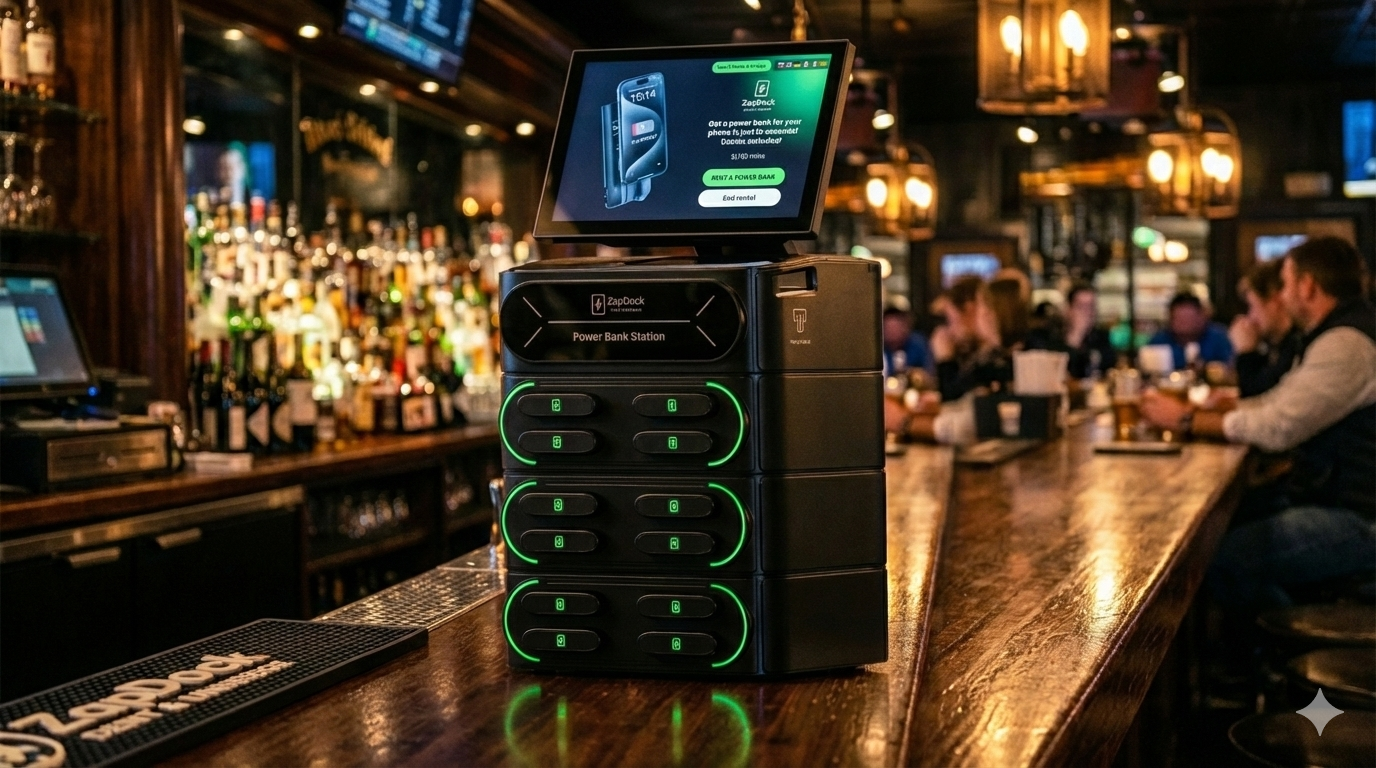
That is the problem Zap Dock exists to solve. We install fast, self-service power bank rental stations into the bars, clubs, restaurants, gyms, universities and events people are already spending time in.
For customers, it means a dead phone is no longer the reason they cannot get home safely, reach a loved one, pay for something, use maps, or continue their night. For venues, it means fewer staff charging requests, a better guest experience, and a new revenue-share opportunity without extra operational pressure.
I built the first version of Zap Dock while studying Chemical Engineering at the University of Sheffield. What started as a personal problem has grown into a venue-focused charging network: installed for free, fully managed by Zap Dock, and designed so venues can offer it to guests without adding work for their staff.